Tuesday, 18 August 2026

Birds


Liam had no idea what to expect as he knocked on the door. Aunt Jemma was formidable at the best of times. Now she had lost her favourite sparring partner and was likely to be more irritable than normal. There was a pause and he knocked again.

He still felt battered after losing Mum so suddenly. One minute she had been giving him, his wife and his kids the benefit of her relentless attention. The next minute, she was gone. Without her whirlwind entrances as she swept in and started cleaning, or cooking or checking homework, or gardening, his home was strangely quiet and it felt neglected. His wife had taken more than her fair share of his mother’s version of encouragement but she was unexpectedly shaken and lost.

The only thing that had diverted Mum’s formidable energy had been her ongoing, low level, continuous verbal sparring with her sister-in-law, Aunt Jemma. Everyone had thought it a blessing that the two strong-willed ladies spent so much of their energy on each other. In their battlegrounds of the local church, the Women’s Institute and the local charity shop, they were known for their organisational ability, insight, creativity and their ongoing arguments. When Dad died, the vicar swore that the only thing that pulled Mum through her devastated grief was the furious argument she had with Aunt Jemma about the funeral flowers. Things were certainly going to be quieter.

Liam looked around. The garden was looking shabbier than usual, and the array of birdfeeders was empty and forlorn. He felt a twinge of worry and knocked again. He should have thought to check up on Aunt Jemma. She didn’t have much in the way of family. She had encouraged her son to go for the high flying job in London and insisted that her daughter follow her husband to the fantastic job offer in Canada, which left Liam as the only local family she had. He felt a twinge of guilt. Aunt Jemma had always been good to him and his family and he had let her down. But it had been so busy with the funeral and then the arrangements. Mum had been as ruthlessly organised with her affairs as she had with everything else. But even with her meticulous preparation, there had still been so much to do.

Liam stepped back suddenly and nearly overbalanced on the step as Aunt Jemma opened the door. She had lost weight, and her usual immaculate hair was hanging loose and unstyled. She was wearing a dressing gown and she looked lost. “I should have called,” Liam said, “But I knew that it wasn’t your day for the charity shop and there was nothing on at church…” he trailed off. “Are you okay?”

Aunt Jemma forced a smile. “It’s good to see you. Come in and have a cup of tea, if you have time.” A flash of her old spirit showed. “But in a proper cup, not a mug like you use at home. At least your mother got that right!”

Liam trailed in after her as she turned towards the kitchen. “Have you been ill, Aunt Jemma?” he asked.

She looked over his shoulder. “I suppose old age is finally catching up on me,” she said. “Sometimes you have to accept that. Losing your mother was a reminder.”

“Do you want me to fill the bird feeders for you?” Liam asked. “I can do that while I’m here. I know that you like to watch your feathered visitors.”

Aunt Jemma shrugged. “I think that I’m out of bird food,” she said. “I’ll have to get some at some point. Anyway, what can I do for you?”

Liam felt the insight spark in his brain. Aunt Jemma didn’t need sympathy. She needed action. “Well, I wonder if you could come around for Sunday dinner. To be honest, I was considering putting up bird feeders so the kids could watch the birds and I think I could do with some advice. Now that the kids are getting older, I think it would be good for them to have the responsibility of keeping them topped up.”

Aunt Jemma looked at him thoughtfully. “Finding a job for me? I’m getting on now, and I don’t have the energy I used to,” she said.

Liam thought that she had had more than enough energy until a month ago when they lost Mum but kept that to himself. “I’m not suggesting that you do anything,” he said. “But I’d be grateful for your thoughts. And I can pick up bird food for you while I pick up some for us.”

“I’m not quite on my deathbed yet,” Aunt Jemma said. “I can pick up bird food. You can come with me once I’m changed and we can go down and I’ll sort some feeders and food out for you while we’re there.” She nodded to herself as she filled the kettle with a lot more purpose than she had shown earlier. “And your wife will be missing your mother, of course. I know how much your mother helped. Mind you, I daresay that you’ll be glad to have less interference, but I won’t speak ill of the dead.” Aunt Jemma plugged in the kettle and pulled out two china mugs. “I suppose she would be glad of a few words of encouragement now and again.”

“We’d be glad to see you,” Liam said. “And I brought this over.” He handed over a package. “It was left to you in Mum’s will.”

Aunt Jemma took her time putting the teabags in the mugs before taking the package and removing the protective brown paper. “I’m glad that she thought of me,” she said. She looked for a moment at the elderly print in the plain oak frame. “Well I never!” Aunt Jemma stared for a moment and then chuckled. “I suppose that she has got the last laugh. She always said that it was a Pre-Raphaelite, and I always said that I don’t care if the painter was Sir Edward Burne-Jones, how can a picture of birds be Pre-Raphaelite?” She shook her head. “And your mother knew that I always loved this picture.” She put the paper neatly in the recycling bin, marched into the living room and took down a landscape, hanging the birds in its place. “Finish making the tea, Liam,” Aunt Jemma said. “I’ll go and get ready and then we can get out and to the stores. I’ll soon get you sorted out.”

Liam smiled properly for the first time since the funeral. He was sure that he would be relentlessly ‘sorted out’ but it would be absolutely worth it.


Decorating the Tree


Vera sighed and put the last bauble on the tree. She had worked for Marlowe and Marlowe, Solicitors, for thirty seven years and had been the one to put the tree up for thirty three of them. It had been easy enough with Old Mr Marlowe. He had just handed over some money from the petty cash and let her get on with it. Young Mr Marlowe had insisted on going with her for any shopping for Christmas, which was tiring. It wasn’t as if she hadn’t handed in receipts tallied down to the last halfpenny, back when they still had them. Vera sighed again. Now the grandson, who insisted on being called Matthew, had brought in the tree himself, without any sort of consultation. It was far too big for the office decorations that now looked rather sparse, and he had bought a real tree instead of replacing the rather dusty artificial tree in the back of the cupboard. It would be shedding needles for weeks.

“I like the scent of a real Christmas tree,” Matthew had said, rubbing his hands with glee.

“That’s what reed diffusers are for, Mr Matthew,” Vera had replied. “And I’m not sure what the cleaning staff will think.”

“They’ll be fine,” Matthew said. “But pick up a few of those diffusers as well. I’ll give you the money out of the petty cash.”

That was the problem. Young people didn’t understand. She already went around with a damp cloth to clear up where the cleaners had missed. And it looked so half hearted. Anyone would tell you that you needed red baubles on a real Christmas tree. But Mr Matthew couldn’t be told.

Her mind drifted a little. Her children had been the same. Daphne had seemed to have learned and had obediently followed her mother’s instructions about what to wear and where to work. She hadn’t need to be told twice when she was wearing unsuitable make up or when the earrings she had bought were too big. She knew the correct way to wrap a Christmas present and address a card. She had listened until she ran off with that unsuitable young man to go and live in Australia. Vera got letters twice a year with pictures of her grandchildren, and they all seemed happy enough, but it wasn’t the same.

Edward, well, her son had always been tricky. She had tried. After Daphne had left, she had tried to get Edward to understand the correct way of dressing a Christmas tree. He had refused to touch it at all. Her husband had been no help either. And now Edward had gone off to live with that Jackie woman. They seemed to thrive on the chaos surrounding them and last year they had had a pink artificial tree. Vera picked up a stray pine needle and inwardly shook her head. She had tried to explain to Jackie where they were going wrong and the explanation had become a discussion which had turned into an argument which ended up as a flaming row and they hadn’t spoken since.

Vera stepped back to get a look at the tree, nodded to herself and then straightened the coffee machine before settling back at her desk. Year after year she had been the one to dress the tree, here and at home, and it didn’t seem to get any easier. She scrolled through the emails. It was only her and her husband for Christmas this year, but at least the tree was done right. She could take satisfaction in that.


Saturday, 15 August 2026

Don't Forget the Flowers


Image from Unsplash taken by Anastasiya Leskova

I had nearly forgotten the date. I had to rush out and pick up the flowers from the nearest florist in a hurry. I never wanted to miss the flowers on this day of all days.

“Promise me you will buy flowers on my birthday,” my aunt had said. Her fingers had been like claws as they clung onto me. I had stared at the dying woman, in the borrowed hospital bed in her bedroom. The nurse had stared sympathetically at me as the light faded with my aunt and the scent of disinfectant filled the air. “Promise me, every birthday, you buy flowers.” She had broken off, coughing.

I had nodded. “I promise, Aunt Carol. I’ll buy them every year.”

“I should have changed my will,” she had gasped. “I should have made you earn it.”

“Don’t make yourself poorly, auntie,” I had said. “I can get the solicitor in any time.” I had ignored the tiny shake of the nurse’s head. We both had known that my aunt had hours left, but there was no point in upsetting her.

“Flowers on my birthday, keep the house the same, no men, and no foreign food. Remember.” Aunt Carol had coughed and gasped and then fallen back on the pillows, exhausted. They were the last words she ever said.

That was three years ago. Aunt Carol had taken me in when I had lost my parents at the age of fourteen. She had terrorised me, gouged every penny of support for herself and sabotaged any chance I had to make a life away from her. I had cleaned her sparse and spartan house, ran her errands and survived. I even gave up my job to nurse her at the end. I had done my duty. All the money she had clawed from my trust fund, along with all the other money that she had hoarded, was left to me. She had never found a way of adding the clauses that she wanted, so she had just insisted, expecting me to be the good, obedient child that I had always been.

Today would have been her birthday. So I ran out and bought a huge bunch of tulips, a flower that she had loathed. I would put them among the cosy throws and knickknacks that she had hated. And later my gorgeous boyfriend would call, and he would bring a curry.

A Date and a Church


Image from Unsplash taken by K Mitch Hodge

“How are you going to find a decent husband if you don’t go to the right places?” My mother was almost incandescent. “History walk! What a lot of nonsense. All there will be is the unemployed and pensioners.”

“It’s not all about getting a husband,” I said. “I run my business, I take care of you and dad, I have my hobbies…”

“Your hobby should be finding a husband!” Mum waved her hands in exasperation. “And look at you. I know how much you are earning these days – and an unmarried woman at that! – but you don’t look it. You should go to a decent stylist, perhaps, and dress a little better.”

“I dress fine in the office,” I said wearily as I dragged my coat on. “And there’s nothing wrong with what I wear.”

“I want grandchildren,” Mum snapped. “And with a nice young man, not some old fogey that’s older than me. Why won’t you meet with Darren Sharp? He’s a barrister and I’ve known his mother for years!” I let her voice trail into the distance as I dashed out.

I had been looking forward to the history walk for months. It took me a few minutes, but I managed to shake off my mother’s mood and join the group. I had not been allowed to forget that I was nearly thirty and had been single for over a year. Today I was going to put all that behind me. I had been fascinated by the old church for years and I wasn’t going to miss the chance. I had had enough of my mother’s complaints.

I was one of the last to arrive and found myself next to the only one in the group who was near my age. He was a quiet looking man, perhaps two or three years older than me, with dark, short hair and an athletic build under his hoodie and jeans. He smiled wryly as I stood next to him. “Thank goodness I’m not the only non-pensioner here.”

I chuckled quietly as I looked at the rest of the group. I guessed that most of them were thirty or forty years older than me. I knew a few of them, and they were great fun, but I agreed, it was fun to have a contemporary around.

“Listen up, everyone,” an elderly man at the front called out. “I’m Vivian, and I’m the guide for today. Can everyone hear me at the back?” He looked around carefully and then, with some ceremony, pulled out some handwritten notes. “Right, thank you for coming to this guided walk. I’m sure that you all will find it educating and entertaining. I’m Vivian and I have been the churchwarden here for forty three years. Let me introduce you to this beautiful building. St Cuthbert’s church has been standing on this site since the Anglo Saxons, but the current building was erected on this site later, starting in the reign of King John, the one who signed the Magna Carta in 1223.”

“1215,” I muttered automatically, then glanced, embarrassed at my companion.

He nodded. “John died in 1216, before the church was started.” We grinned at each other.

Vivian cleared his throat and gave us a dark look. “As I was saying, the church was started 1223 with money from the local lord, Lord Robert, during the reign of King John, son of the famous Richard the Lionheart.”

“Brother,” I murmured. “John was Richard’s brother.”

“Hasn’t he even seen the Disney cartoon?” my companion said.

We hushed quickly after catching Vivian’s expression, and trailed after him as we passed through the lych gate and up towards the church porch.

We deliberately fell behind. As an architect, I could talk easily about the building, and he was wonderfully knowledgeable about the religious side. We could hear Vivian butchering history but let it drift over us as we marvelled together at the beautiful late Anglo Norman stonework and the Victorian stained glass. Time seemed to fly by as we talked and talked, and we had to hustle as Vivian led the rest of the group back to the church door and waved his keys pointedly.

We walked back to the car park. He raised an eyebrow at my Range Rover. “Nice car.”

“I’m not always in the office. I do site visits and I need something reliable.”

He nodded. “I’m always in an office, so I just go for comfort,” he said, as he waved a hand at the Volvo parked next to me. He smiled. “I’m glad you were here. I think I would have murdered the churchwarden if I’d had to listen to him.”

I nodded. “He meant well,” I said, “But he missed so much.”

“I’m going to a talk on Medieval Crosses next Tuesday evening,” he said. “Would you like to come? I’ll even buy you dinner afterwards.”

He had a lovely smile, and I smiled back. “I’d love to. I’d better give you my contact details, just in case.” I pulled out a business card. “I’m Kylie Brenner.”

He stared at me. “Kylie Brenner? Kylie Brenner the architect? The one who’s mother is a great friend of Imelda Sharp?”

I nodded slowly. “That’s right.”

He grinned. “I’m Darren Sharp. I’ve been hiding from you for months.”

I laughed. “I can’t believe it. Well, despite all the efforts of my mother, I would still love to come to the talk and dinner,” I said. “But perhaps we shouldn’t tell our mothers.”

“Perhaps not,” he agreed.

Flowers

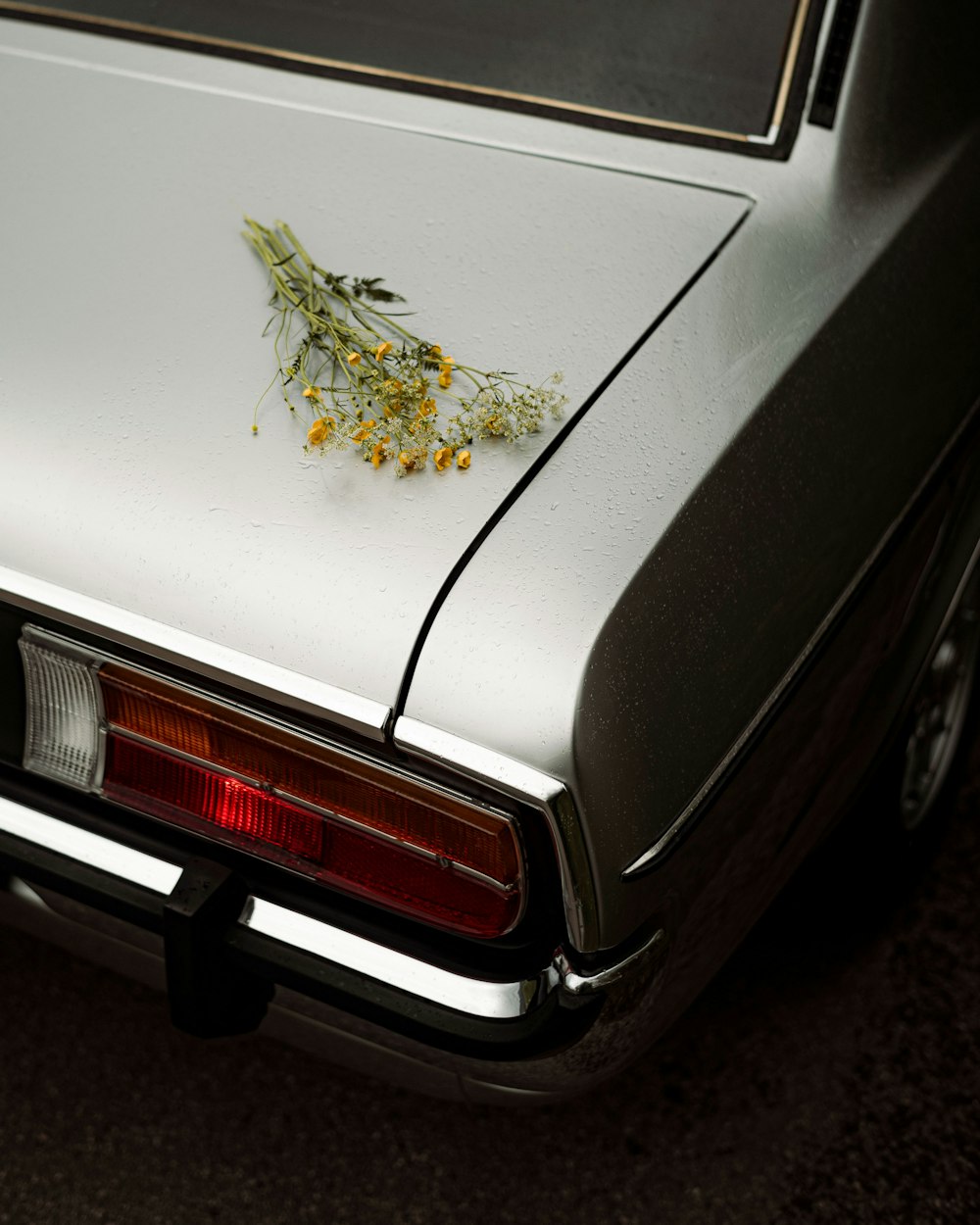
 green and yellow plant on white car

Image from Unsplash, taken by Maurice Pehle

“The flowers are late!” I rushed into the kitchen, my wedding dress bunched around my waist and my veil askew. I looked at my husband-to-be. “I knew we shouldn’t have trusted that florist.” I took a deep breath. “And I knew we shouldn’t have got ready together. It’s supposed to be unlucky.”

Tim sighed. “It’s just nothing. It’s probably meant to allow the bride a little peace to get ready without the groom asking a lot of questions and causing fuss. We aren’t doing all the fuss.”

It made a sort of sense, but I was still frantic. “What about the flowers?”

“Can’t your little friends help out with that?” Tim asked.

“You know I don’t like you calling them that,” I said. I manouevred my skirt over a stool and sank down. “They’re the fair folk – if you have to talk about them at all.”

Tim walked over to me, put his hands on my shoulders and kissed me gently on the forehead. “Well, whoever they are took a lot of getting used to. I’m still not sure they approve of me. But I love you, friends and all, and don’t worry.” Tim grinned, that crooked grin that I loved so much. “Besides, they’re more like family, really, and we all have awkward family. I mean, you’ve met my Auntie Violet. She is far worse than misplaced car keys and iffy reception for the radio.”

I smiled back for a moment. “Lots of people call this house haunted, but it isn’t really. I just have friends.” My face fell. “But no flowers – and you know that the minister said he wouldn’t go ahead if we were late. We can't wait around for the dratted florist. What are we going to do?”

Tim took my hands and gently squeezed them. “My darling, we agreed that this is about the marriage that we are going to have for the rest of our lives, not one day. We agreed that we would remember the things that went wrong as fun stories and not as awful events.” He grew serious. “I wish my mum was able to come, but we lost her last year. I wish your family was still here. I wish that your bridesmaid hadn’t eloped with my best man a week before it was all due to happen. I wish all sorts of things. The flowers, well, it’s just another story. As long as we get married, that’s all that matters. I love you.”

I smiled back. “I love you too.” I sighed. “I hope the fair ones are happy. They haven’t interfered so far, which is a good sign.” I disentangled my voluminous skirt from the stool and stood up. “They mean a lot to me.” I pulled myself up and settled my veil. “They’re the last of my family. Come on, we can’t be late. We can do without the flowers. Let’s go and get married.”

Tim led me outside ready to drive to the church, then stopped. I almost fell over as I bumped into him and then stared. A small bundle of wild flowers lay across the boot of the rental car.

Tim picked them up tenderly and looked around. “Thank you for this,” he said to the empty air. “An amazing gift on our wedding day.” He turned to me. “Your family have given their blessing. Let’s go and get married.” He looked around again. “And I’ll save you some cake!”

The Picture


Image from Unsplash taken by Jack Niles

“I don’t know why you’re so fascinated by that picture,” Freddie said. “It’s nothing special. My mother was an art student once. She painted a few pictures.”

Alice continued to stare at the painting. “Why?” she asked. “Every time I see that picture I ask myself, why? Why did she frame it like that?”

“I don’t know,” Freddie said impatiently. “You know what my mother was like. She probably found a cheap frame.”

“But it’s a shame. It should be mounted properly, with a proper matte backing and a larger frame, perhaps a darker one, and a decent amount of wood, not those skinny sticks.”

“Well, it’s all ours now, so take it and reframe it.” Freddie looked around his late mother’s flat. “All of this is ours now. What a mess.”

“You keep saying that your mother had money, and the will said that she left it to you and to not waste what you’re given, but there’s nothing really here.” Alice stared at the painting. “Except this painting.”

“It’s just something she did as an art student.” Freddie frowned and checked the piece of paper in his hand. “The solicitor said that she talked about having planted the money in the flat.”

“Planted…” Alice murmured, still staring at the picture. “Mind you, I don’t think she had two pennies to rub together. Look at the state of this flat.”

“She was careful with her money,” Freddie said. “And she liked a bargain.” He glanced at his expensively dressed wife. “You could have learned a thing or two.”

Alice ignored him and looked around the tousled flat. “That sofa is older than I am! And that side table is scratched to bits.”

Freddie slowly lowered himself onto the sofa and relaxed. “I remember this sofa. It’s one of the comfiest I’ve ever sat on. Mind you, it needs a new cover.” He looked at the side table, cluttered with dirty cups and dried up houseplants. “Though the table isn’t fit for anything. It was only cheap chipboard to begin with.”

Alice turned back to the picture. “Planted. Your mother really liked this painting, didn’t she?”

“Hmm?” Freddie settled himself in a corner of the sofa and looked around again.

“I mean, it’s so striking, and in such a central place.” Alice leaned over. “I bet that’s where she put her savings book. Behind the picture. Or perhaps there’s a safe.”

“She liked the picture because she already had it and it took up enough wall to make it look decorated,” Freddie said dispassionately. He looked around again. “I remember those mugs from when I was a kid. She got them as a free gift.”

“How much money did your mother leave?” Alice asked. “I mean, just a savings book with a hundred pounds or so wouldn’t take up much room.” She grasped the picture and, after a quick struggle, lifted it down.

“The solicitor who handled it all has already paid the inheritance tax and that was a fortune,” Freddie said. “It’s more than a small savings account.” He frowned, then sighed. “She did love her plants. I suppose she wanted us to take care of them, but they died before we got the news.” He reluctantly pulled himself out of the comfy corner of the sofa. “What are you doing?” he asked Alice.

“The information – it’s behind the picture!” Alice said as she wrestled with the painting. “Look, it’s about plants, and everyone knows that you can keep papers behind pictures in frames.”

Freddie shook his head and started lifting the houseplants. “You need to take that picture, reframe it, hang it where you like and then forget about it.” He lifted a formerly magnificent specimen of philodendron. Between the pot and the pot stand was a key. “The safe deposit box key. Mother was never that complicated.”

Eggs for Breakfast

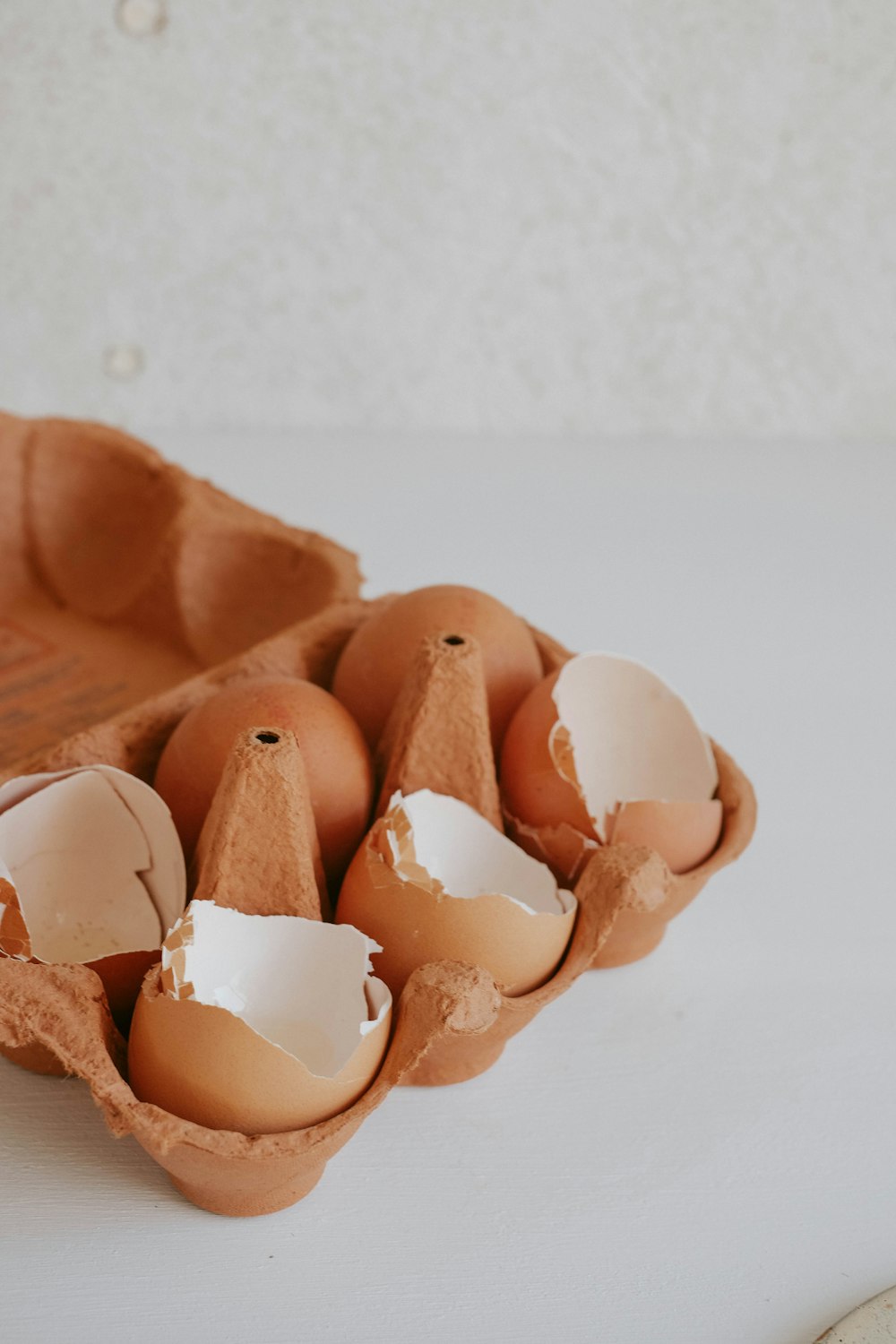
 white and brown heart shaped cookies

Image from Unsplash taken by Franzi Meyer

“These are hard,” my mother said. “You should make some new ones.”

“Sorry, I’ll get them done now,” I said.

“I don’t know why you can’t them right first time,” Mother complained. “It’s not like you never cook eggs.”

“Sorry,” I said as I put the pan back on the heat. “Maybe I should get the pan hotter first.”

“You never think!” Mother said. “You’re going to have to have them. I can’t have them going to waste. And what about dinner? I suppose you haven’t thought about that?”

“I’ve got some chicken out of the freezer,” I lied, knowing what would come next.

“I don’t fancy chicken,” Mother said. “I think that we eat too much chicken. Is that toast fresh?”

“Yes, it’s just come out,” I said as I buttered it quickly and slid it on to the plate. I pushed it over to her and cracked two more eggs into the pan.

“You could have at least cut the toast for me,” Mother said. “I have to do everything. You have no consideration for me. I’ve had such a bad night.”

“Sorry,” I repeated, as I quickly poured tea into her mug. “Here, this will help.”

Mother took a sip. “Is this milk okay?”

“It’s fine,” said, turning the eggs. “I had some in my tea when I got up earlier.”

“It tastes off,” Mother said. “Could you open a fresh carton?”

“It’s the last carton,” I said. “I usually pick it up after work, but there was that after work meeting, remember, and I didn’t have time before getting home to cook dinner.” I slid the new eggs onto her warmed plate and pushed the toast nearer.

“You’ll have to pick up some tonight, and some eggs. We seem to go through so many eggs with you wasting them.” Mother shook her head sadly. “So what are we going to have for dinner if we can’t have chicken?”

I shrugged. “I don’t know.”

“You should know!” Mother exclaimed. “You are the one in charge of the kitchen, you should know what we have. We’ll just have to order pizza. I know you say you don’t like it, but you should have thought of that before getting the chicken out. And today of all days! You know I’m out for the day with Mrs Timmins and you didn’t even press the blue dress.”

“What blue dress?” I asked, bewildered.

“The one in the wardrobe. It’s been there so long that it was looking sad. I’ve had to put on this pink one. Of course, if you took me out more, it wouldn’t matter so much.”

“But you know I work,” I said wearily and took a bite of the eggs she’d rejected. They tasted fine.

“I keep telling you that you should give up work and get carer’s allowance. You and me could be quite cosy, just the two of us here,” Mother said. “I don’t know what you need your job for. They only pay a pittance.” She looked out of the window. “There’s Mrs Timmins – I have to go! Where have you put my bag?”

I watched her leave, sipping my tea as she glared one last time at me through the window as she climbed into Mrs Timmins’ car, then breathed out. Finally she was gone. I dumped my unwashed plate and mug into the sink and raced upstairs to grab my one remaining bag. My job paid extremely well, thank goodness, though she never knew, more than enough for the very reasonable rent on a tiny flat near work. The down payment had cleared, I’d picked up the keys and today was the day I moved away from Mother and into my own home. And what was more, I thought, as I shut the door and pushed the keys back through the letterbox, I would never, ever have to eat eggs for breakfast again.

Just One Day

 cupcake

Image from Unsplash, taken by Melissa Walker Horn

It’s just one day.

Getting ready in this household is never a calm, ordered procedure. I don’t know anyone with organised mornings, and they’re certainly chaotic here. But finding the missing school book and digging out the car keys seem to float past me this morning. I don’t say anything – it wouldn’t be fair. I just carry on as usual.

It’s just one day.

I’ve done the school run so many times, that it’s on autopilot. Even the the frankly erratic driving of the vans and the chaos of the roadworks seem somehow muffled, like the teenage texting happening next to me.

It’s just one day.

And I’ve washing to do, dinner to make, errands to run, and it’s all in the same quiet bubble. I remember to pick up the small cake, just like last year, but keep it quiet. I don’t want to make a fuss. I don’t want to upset anyone. It’s personal, and private to me.

It’s just one day.

And now the hustle and bustle of the day has passed, and I have a few moments alone, I can look at that cake. Your cake. Your birthday cake. I lost you, my baby, far too early to know whether to get a pink cake or a blue cake. I never saw a smile or heard a giggle. I never soothed you or comforted you. You left before you arrived. Today, if you stuck to the due date (and babies never do) would be your birthday.

It’s just one day.

And, though you normally rest quietly in the shadows, today I remember. Just one day to think of what could have been. Then I leave you once again to rest until next year. I love you, my darling.

A Small Spring

 black and white flower under white sky during daytime

Image from Unsplash taken by Marek Piwnicki

“I don’t know why people press flowers in books,” Ken said as he dusted down another stack of hardbacks. “It’s awful for the books and it doesn’t do much for the flower. Why don’t they use blotting paper and then put it in a frame?” He sighed and tipped out another sprig of faded leaves. “At least this one hasn’t stained the pages too much.”

Lynn looked around the crowded room. “Do we really need to go through all these books now? Perhaps we could go for a walk and get some fresh air. It’s a lovely day.”

“It will take more than a day to get through these,” Ken said. “And don’t forget, we have another shipment coming at the weekend.”

Lynn stood up and dusted off her jeans. “I’ll make us a cup of tea,” she said as she picked her way through the towers of stacked books.

The kitchen was just as full. Her late uncle had left her everything. The exasperated landlord had piled the hoarded contents of Uncle Tim’s house into storage and sent Lynn the bill and now the contents of the storage units were being sent down by instalments from Scotland to their Bristol town house. Boxes and boxes of junk were travelling hundreds of miles to pass under Ken’s inspection.

Lynn poured boiling water on the teabags and looked around the kitchen. It was crammed. Uncle Tim had collected some beautiful enamelware and Lynn had suggested that they throw out the mismatched utensil pots and the tea and coffee tins that had come free with her saucepans and use the lovely, warm cream pots and jugs, but Ken was talking about how much the enamelware would fetch and thought that they should keep the old stuff. She added sugar to Ken’s mug and then topped up both drinks with milk. She didn’t want the money. She wanted Uncle Tim back. She carried the drinks back to the living room.

The books were dusty, mainly from Uncle Tim’s house, and Ken had dark smears on his face and shirt. “Thanks for the tea. It’s dry work. I’ve tossed the flowers I’ve found so far into the bin, but some of them have still stained the books. It’ll affect their resale value.”

“What? Some of those were put there by mum! I remember her putting them there.” Lynn stared at him.

Ken shifted awkwardly. “Well your mum’s been gone for a bit now. I don’t suppose she minds now that she’s in a better place.”

“I could have planted any seeds on her grave,” Lynn said. “Why did you do that?”

“I said that it will give a better resale value. We could get enough for a wedding if we sell this lot and get a good price for the enamelware, and perhaps we could get a better car for me, depending on what else is sent down. At least the landlord seems to have been honest. It doesn’t look like he kept back anything valuable. This is a first edition by Hemingway novel. I’ve found the same copy is over £7000 online.”

Lynn looked at him and then back at the book. “I remember Uncle Tim reading that story. He kept that copy for best and read and re-read paperback versions. He loved his Hemingway.”

“Lucky for us he did,” Ken said, making a note in a notebook and putting it to one side. “We could sell this place and get something a little nicer under both of our names. Something with a bigger garden.”

“You hate gardening,” Lynn pointed out as she stared at her partner. He’d been in her life for eighteen months now. Why had she not seen him clearly before? The house was hers, the car was hers, and all these treasures from Uncle Tim belonged to her. Ken didn’t even share the bills. He just paid for the Sports Channels that he had insisted on. At least she had held out for that. She didn’t even remember inviting him to stay. He had been living with his mother and after a while the nights he had stayed over had merged until he never left.

“But it will be nice to relax in a garden,” Ken said. “We can have a quiet glass of wine at the end of the day, perhaps with a barbecue.”

Lynn looked around and started sorting through the books. She was sure it would be here somewhere. “I’m very happy here,” she said. “And the neighbours are lovely.”

“I know that you’re close with the neighbours, but that doesn’t mean that you can’t visit,” Ken said. “You know, now and again.”

He had never liked her friends, Lynn remembered. She hardly seemed to see them nowadays. There always seemed to be something else happening. She shifted a stack of books and found what she was looking for – Pride and Prejudice. She had been holding it as she had excitedly told Uncle Tim about Ken, how they had met on a walk and how he seemed absolutely perfect. Uncle Tim had insisted that she picked a spray of borage from the border and preserve it, as a memory, so that she could look back one day and remember the excitement. She shook the pages carefully and caught the brittle fragment as it fell.

“That looks newer,” Ken said. “I wonder who put that there.”

“I did,” Lynn said. She tossed the small sprig into the bin. “And I’m not moving. But you are.”

The Garden

 white flowers in tilt shift lens

Image taken by J Lee on Unsplash

It had been a tough week. In the space of three days I had left my boyfriend, moved right across the country to a new home and started a new job in a different industry. I didn’t know if I was on my head or my heels.

I stepped outside my back door and into a green space. That was something else I needed to work on. For the first time in my life I had a garden. I had always lived in flats, but when I saw this house on sale within my budget and five minutes walk from my new job, I went for it. Now I was regretting it. What was I supposed to do with a garden? I didn’t know a plant from a weed.

I slowly stepped forward onto the unmown lawn. At least I could recognise the daisies flourishing across the grass. It was sort of sad. Someone had really loved this garden, but I didn’t know where to start. I suppose I should start by buying a lawn mower.

“Hello,” a voice said across the overgrown hedge.

I peered over. “Hi, I’m Kate. I’ve just moved in.”

“I’m Rick. I’ve lived here a few years. I knew Mrs Carr, the old lady who lived here.” The tall man behind the hedge nodded politely. “She died you know, in hospital.”

“I’m sorry.” I said.

“She was very fond of her garden,” Rick said. “We used to talk about plants a lot.”

“I don’t know anything about gardening,” I admitted.

“I’m sure you’ll be able to keep up the garden,” Rick said with breezy confidence. “It’s low maintenance. I spend a little more time on my plot.”

I walked along to the gap in the sagging fence. “It looks very nice,” I said uncertainly. The manicured rows of plants marched in rows, ruthlessly pruned and trimmed and without a leaf out of place.

“Those are the shallots,” Rick said, “I’m looking forward to pickling those later. Of course I’ll add some of the chilis from there. That’s the brassicas. I’ve got chard, perpetual spinach, cabbage, kale and some tender stalk broccoli. I’ve got some sprouts coming in the greenhouse.”

“That sounds nice,” I said.

“I’ve been having trouble with the onions, so I’ve tried the old trick of planting with parsley and that seems to be working. And I have rosemary with the tomatoes over there.”

“Mmm,” I said, trying to look intelligent.

“Tomatoes can be tricky, and I’m having a spot of trouble with blight. The cherry tomatoes seem to be okay, and the yellow tomatoes in the corner, but the heritage varieties don’t really stand up to it. It’s only to be expected.” Rich’s eyes were alight with his passion.

I nodded, as if I had a clue as he raced on about planning for parsnips and the issues with carrots but I was distracted. Just next to the gap in the fence was an untidy drift of white flowers that looked out of place among the regimented beds. “What are those?”

Rick paused in his account of his flourishing garlic plants and looked uncomfortable. “I don’t know. They self seed and I like the way they look. Mrs Carr always used to say that they looked joyful.”

“I think you’re going to have to give me some advice on my garden,” I said, “But keep it in the same way as Mrs Carr left it.”

Rick nodded, smiling. “I’d like that.”

After all the hurry and dashing around over the last month, with all the tension and worry, something inside me relaxed. It was going to be alright.

The Find


I loathed shopping with my Aunt Harriet. She always wanted a bargain and she always wanted the best of everything. I had flinched as she swept into the secondhand bookshop. I knew what was coming.

“I’m only interested in First Editions,” she announced. “Of good, classic works.”

“I do have a few select copies.” The bookseller led the way to the back of the shop. I could see him mentally adding a ‘difficult customer’ surcharge. “Perhaps madam would be interested in this? It’s a first edition copy of An Expedition to Patagonia. The illustrations are exquisite.”

I glanced over Aunt Harriet’s shoulder. The faded line drawings and water colours looked insipid, but I never claimed to be a judge. “It’s very nice.”

“It’s a find my dear.” Aunt Harriet announced. “So many of these have been sadly pulled apart and the illustrations sold separately as prints for profit.”

“Indeed,” the bookseller agreed, resigned to the fate of the book.

“But these marks are unacceptable,” Aunt Harriet said. “I was looking for an elegant copy.”

“Marks occur on books of that age,” the bookseller said. “It is a natural process.”

I wandered away towards the bargain bin. I didn’t want to be drawn into Aunt Harriet’s haggling. There were the usual contents. I found a copy of the Da Vinci Code, a battered cookbook with the soup section missing, a very dated road atlas and – a treasure.

I checked and checked again. It was Jamaica Inn by Daphne Du Maurier and perhaps my favourite book in all the libraries. The price was pencilled on the inside. My hands shook and I had to check yet again. I glanced across at the bookseller who was holding his own against Aunt Hattie and keeping the price firm. I looked again. This was a first edition and he only wanted ‘Clearance 50p’. I’d seen it online for hundreds of pounds.

“I’ll just get this,” I called over to Aunt Harriet.

Aunt Harriet ignored me and pointed to an infinitesimal mark on the spine. “I wouldn’t be surprised if that were mildew. I don’t know how you could charge so much for a damaged copy.”

“It’s described as ‘slightly foxed’ in the catalogues and there has been some interest from abroad.” The bookseller was refusing to budge on the price.

I edged across and tried to play it cool as the assistant rang up the find, too distracted by Aunt Harriet’s antics to pay much attention. “I’m sorry about my aunt,” I said. “She likes a good haggle.”

The assistant grinned. “It’s great seeing my boss finally meet his match.” He looked over to the combatants. “It looks like they may be some time.”

I called over. “I’ll just wait in the coffee shop across the road.” And, leaving my aunt engrossed in her bargaining, I escaped with my prize.


Lemons

Photo by Pinar Kucuk on Unsplash

Clare looked at her aunt. “I told you, I’m starting a new job next week. I’ll be able to help out on weekends, but I need the money.”

Sheila shook her head. “I know I didn’t pay you a full wage. But this business will be yours one day.”

“What about your kids?” Clare thought about her cousins. It seemed unfair that they should be left out. They worked just as hard as her, and she had long suspected that they had been given the same promises.

“They have their own lives,” Sheila said quickly. “Come and have a look at this. I thought we could open for the breakfast crowd. It wouldn’t be too much extra effort.” She thrust a large basket of lemons into Clara’s hands. “Bring these with you.”

It wouldn’t be too much extra effort for her, Clara thought resentfully as she trailed after her aunt. “I’ve promised them I’ll start on Monday, and I’m looking forward to it. I know it’s just a receptionist’s job, but…” Clara trailed off. “What is this?”

“It’s a concept.” Sheila said. “Look!” She flung open the door to the tables with a flourish.

“What is this?” Clara stared at the assortment of ingredients on the tables.”

“Like I said, it’s a concept.” Sheila looked smug. “Assemble your own breakfast, or have it created for you for a nominal extra charge.”

Clara’s heart sank. “What are the lemons for?”

“We can’t have Eggs Benedict without hollandaise sauce, and you’ll need lemons for that.”

Clara stared at the scattered assortment on the tables. When she had been unwillingly dragged into this business, her aunt had served bacon butties and strong tea. It had been Clara’s hard work that had added freshly baked cakes and proper fry ups to the menu, with some decent home made soups and more than just tea on the drinks board. It had given Clara immense satisfaction and she had thought for so long that if they just turned a corner, if they just got the extra tables, if they just opened a few hours more then she would get her reward. She turned and looked at her aunt who was watching her with a calculating eye. Life was giving her lemons, and she was damned if she was going to make hollandaise sauce at 6.30am with them. “I’m not coming back,” she said softly. “Goodbye.” She picked up some lemons on the way out, ignoring her aunt’s outraged protests. When life gives you lemons, you make lemon meringue pie.   


Friday, 14 August 2026

Being Careful

Photo by Hanna Balan on Unsplash

I reluctantly answered the phone. Kay was my best friend, but I knew what she would say. “Hi.”

“Thank goodness you are safe.” Kay sighed. “One day you will look before you leap. There could have been anything waiting for you.”

“I’m fine.” I said. “And I did a lot of research.”

Kay snorted. “Looking on Google maps isn’t research.”

“It’s just as I expected.” I leaned back against a packing case. “The rented house needs a major clean, the library I’m supposed to sort out is a mess and my employer is sort of a sweetie but hasn’t a clue.”

Kay laughed. “Trust you to fall on your feet. How you have got through life in one piece is a mystery. You just charge at things without ever considering what might go wrong and somehow find things working out.”

“There are some amazing books in the library.” I said. “There’s some volumes that are so rare and antique that I don’t think I’ve ever seen in a catalogue. I’m going to be busy for a while, and the pay is great.”

“I’m really pleased for you.” Kay said. “Anyway, the reason I called was your housewarming present. I know it’s only rental, but it’s a new home. If you look in your blue case, tucked into the top corner, you’ll find a package. Go and get it. And when you find it, please be sensible!”

I found the blue case on the bottom of the pile, of course, and found the small packet Kay had tucked there for a surprise. Wrapped in blue paper, with a long list of safety precautions, was a candle with my favourite scent. I set it on a sturdy packing case, lit it with the matches Kay had included, and sat back. The uncertainty and homesickness slipped away and I spent a few moments appreciating Kay’s kindness before getting on with the cleaning – taking due precautions around the lit candle, of course.


Countryside


“Is it definitely this way?” I was sure I had stepped in something squishy.

“Hmm?” Charles walked forward a little. “Yes, the man in the shop said it was along here.”

The man in the shop was fine with Charles but never seemed to take to me. Conversations paused as I walked in and he asked me if I wanted any ‘special orders, like them olives?’ and looked somewhat disappointed at my purchase of potatoes and carrots. “Did he say how far?” It felt like I had walked miles.

“Not far.” Charles looked around and took a happy breath. “That’s wild garlic over there. We could cook with it.”

I stumbled over a lump in the path. “Only if we get it away from where people walk their dogs.”

Charles laughed. “You wait until I get the garden sorted.”

That was the deal. He sorted out the garden, I dealt with the house. We had moved in too fast. Really the whole place needed to be gutted. The wallpaper was older than me and I didn’t like to speculate about the plumbing. “It’ll be great.”

“Look, it’s just down here.” Charles strode ahead.

I waved away the midges from my face and followed. The dim green tunnel of the lane opened up and then I was in the sunlight and looking over the incredible view. Woodland mixed with patchwork fields and the sun slanted down on the glowing, late spring landscape. I glanced at Charles and the delight on his face was as strong as the sunshine as he took a deep, refreshing breath of country air. The tension in his shoulders had gone and there was a sparkle in his eyes. Moving to the country was definitely worth it.


Appearances


Jane stared out of the window. The rain lashed relentlessly, filling the gutters and running in rivers down the street. What a day for a first day at work. And she had to look good. Her interviewer, Matt, had emphasised that her appearance was part of job performance. “We are a design firm, Jane, and we have to look like appearance matters. And you need to change your name for work hours. Have you thought about Styria?” He grimaced. “You are the best applicant for the job but ‘Jane’ is a little, well, plain.”

This needed a little lateral thinking. There was no way any hairstyle would survive, even in the car, so she could wrap her hair in a boho scarf. Jane looked at the little honda sitting forlornly outside. She would get her feet soaked in the few yards from her door. That meant she wore boots to the car but changed at work. In fact, she could get completely changed at work. Jane hesitated. As long as they didn’t mind her diving in looking like a fisherman before she got changed. She swallowed. This was the perfect job and she had been craving something like this since school. She had to make a good impression.

The drive to work was one of the worst she had ever done, peering through the sheets of water as she swooshed into the carpark of the elegant and modernistic building, water spraying as she turned. The race from car to office was equally challenging and she dripped over the expensive marble floor as she ran to the bathrooms.

Thank goodness she had left plenty of time, Jane thought, as she looked at herself in the mirror. She definitely looked ‘boho’ with her hair quickly dried and wrapped in the tie dye scarf, and the flowing skirt and blouse that had survived the car journey uncreased echoed the bright colours. She swallowed. Did she look right? Had she hit the right note with what seemed more like partywear than the severe business suit of the last job. She took a breath and left the bathroom, almost colliding with a tall, elegant blonde with well cut, dripping hair and soaked, fashionable clothes. She stared at Jane for a long minute.

“A headscarf! Why didn’t I think of that? It’s genius!” She smiled warmly at Jane. “You must be Jane, or Styria. I’m Mel, but if you get calls for Cytheria, that’s me.” She shook her head. “I don’t know where Matt gets his ideas. I’ll meet you at your desk in a minute, once I’ve dried myself off.” She dived past Jane, trailing a cloud of expensive scent.

Jane hung up her coat on the coat pegs in the office and stashed her bags under the desk with a place card with her name on in beautiful copperplate. Everything looked so styled. The office furniture gleamed, abstract prints hung on the walls and even the pot plants seemed chosen for effect.

“Good morning Jane, or Styria.” Matt came over. “I’ll give you the tour in a moment, but I think you should have this first on such a morning.” He set down a cup next to her. Jane looked at the carefully constructed, uncomfortable looking mug. “The boss doesn’t normally make drinks for the staff, but today is definitely a day for a nice cup of cocoa.” He smiled and went to hand another, similar mug to Mel.

Jane picked the cup up with care and took a tentative sip. It was perfect – warming, soothing, old-fashioned cocoa. She was going to like it here.


The Chase

Photo by Aubrey Odom on Unsplash

Marge checked her speed. Fleur was driving at a sensible speed for once, which made it much easier to follow. She was not going to let her get away with her schemes. Marge had rights and she was determined to use them. She would not be distracted by Fleur’s games and schemes. They would not escape this time.

“Fleur did you seriously pay your cousin to drive your car to the next town?” Nick stared at his fiancée.

Fleur grinned. “I told him that there was likely to be issues, and that your mum would follow.”

“And he was okay with that?” Nick asked.

Fleur laughed. “He thought it was hilarious and said he would promise not to lose her. But what choice do we have? If we want to have any chance of choosing a decent wedding venue, we have to find some way of leaving her behind.”


Music in a Bar

Photo by Ashley Byrd on Unsplash

“Why bring me here?” Jess asked her brother. “I don’t understand.”

“I’ve sort of fallen for someone.” Kai answered. “It’s complicated.”

“It’s always complicated with you.” Jess answered. She looked around the dingy bar with the stained tables and dated chairs. The evening sunlight was slanting through the worn blinds but it showed little except the tired houseplants. The place was clean – mercilessly, relentlessly clean, and the glass of house red she was nursing was okay, but it was nothing special. Kai, who knew his wines, had a glass of beer in front of him. “How did you find this place?”

“Jim told me.” Kai said briefly. “See how it’s filling up? Aren’t you glad that you came early?”

Jess looked around the bar and it was indeed filling up. All the chairs were taken and the bar was ringed by young men. There was a hush of expectancy hanging in the air and conversation was falling away. “What is going on? Is this why you are moping around?”

“Shush.” Kai said impatiently and then silence fell.

Jess stared at the woman who came self consciously from behind the bar. Her hair was scraped back and the unflattering dress hung loose around her spare frame and the work roughened hands that brushed down over her skirt were unadorned by rings and her nails were plain. The thin face that looked anxiously around was scrubbed clean and angular. Jess glanced around the bar. Every man there, and it was almost all men, were leaning forward slightly, fixed on the youngish woman who sat at the scarred piano.

“She’s called Cecily.” Kai whispered to Jess, earning him a glare from the nearest men.

Cecily managed a forced, nervous smile and then started to play. Everything changed. Suddenly there was a glow in the air, a sense of wonder. Her unremarkable hands suddenly were enchanted. They danced gracefully over the battered keys, coaxing music that called to the soul. Arpeggios soared over a sublime rhythm, while the themes and counterthemes entwined and raced along the compelling song. Jess was caught, entranced, as Cecily coaxed the music of the gods to ring around the battered bar. You could almost see a golden haze hanging in the room as the glorious performance held everyone in its magical grasp. And in the haze of the music, she was gloriously, wondrously, goddess-like and beyond beautiful, lit from within by the inspiration of her playing.

Then she stopped. Cecily stood, pushed a strand of mousey hair from her face, smiled awkwardly and then scuttled behind the bar, where she started washing glasses. It seemed almost sacrilege to break the spell and clap over the last echoes of the ringing notes, but first one, then several, then the entire bar clapped wildly as Cecily blushed awkwardly and racked up the glasses.

“That’s why we come here.” Kai said, placing another glass of unremarkable red in front of Jess. “She plays most nights. And we are all a little in love with her.”

And Jess understood.


Mistaken


“Excuse me, I’m here to see Ms Carruthers.”

I looked up at the young lad holding a flower arrangement and almost vibrating with nerves. “I’m…”

“Sorry, I should give you my name. I’m Tom.” He smiled at me, humour showing despite his nerves. “I’m here for the job interview, and I’m a little bit early.” He looked around. “Have you sent many in to her?”

“No, that is…”

“The agency said that she didn’t ask for many candidates, so I should have a good chance.” Tom took a breath. “I’m sorry, I can’t stop talking. It’s nerves. Where should I put the flowers for her?”

“You could leave them here,” I managed to insert a few words. “But...”

“It would look better if I took them in, wouldn’t it, though?” Tom said thoughtfully. “Is she nice? I mean, have you been her secretary long?”

I struggled to find the right words. “I’m not her secretary, I’m…”

Tom blushed. “I’m so sorry. I know these are hired offices. Mum said it was cheap hiring an office for a few hours, but dad said it made sense rather than trekking all the way out to the main warehouse. But we live close enough so I could walk there if I got the job. It must be fun seeing all the different businesses come and go.” He looked around the well appointed foyer. “What is she like? I’ve only really found stuff about the business. But I saw a piece where she said she wasn’t fond of roses, so I got her these.” He placed the arrangement carefully on the reception desk. “But all the branding is pink, so I guess she likes pink. At least for the brand.”

“Pink is a lovely colour,” I said, “And the thing is…”

“I’ve checked the branding all across the different fronts.” Tom said. “It’s brilliant the way that it keeps the same palette and font but has subtle differences.” He looked a little uncomfortable. “I can think of some ideas to freshen them up. Mum said I should say stuff in the interview, but dad said I should hold it in reserve.” He shifted uncomfortably. “What do you think?”

“I think it shows you have initiative.” I said. “Listen…”

“I really want this job.” I could see the hunger in Tom’s eyes. “It’s not just a job. I love all this stuff. The detail is amazing. I know I’m general IT, but the subjects she covers are fascinating – I’ve been following her twitter since it was set up and there’s always something going on. I’ve always wanted a job like this.” He looked at me with pleading eyes. “Do you think I have a chance?”

I took a breath but I was interrupted by the office receptionist rushing back from the bathroom.

“Sorry about that, Ms Carruthers. I see you have your papers. If you go through to the Regina Suite, I’ll send the first candidate in.” She smiled professionally at Tom. “Can I help you?”

Tom lost every trace of colour as he realised he had mistaken his prospective employer for a secretary. “I’m really sorry, Ms Carruthers,” He mumbled. “I guess I don’t have a chance now, but please keep the flowers.” His shoulders slumped.

“Tom, isn’t it?” I said firmly. “You’re hired. I’d be mad to miss anyone willing and able to research to that detail.” I turned and smiled nicely at the receptionist. “Could you cancel all the other candidates, please. I’ve got the one I want.”


Treasure

I flicked through the vintage knitting patterns, but nothing really caught my eye. The junk shop in the corner of the neglected market hall was overflowing with trash and treasure and it was hard to sort the good from the bad in the dim and dusty light.

“I have some lovely ivory knitting needles.” The owner loomed out of the shadows. “They are quite rare these days, but I am lucky enough to have some in stock.”

I reluctantly took the needles he pushed into my hand. They were obviously plastic, with seam marks from the moulds still evident. “I don’t feel comfortable with ivory.” I said, with perfect truth, handing them back.

“I have a lot of vintage needlework items.” The elderly man shuffled around the heaped table and nearer to me. “There are some lovely things, you know, it’s a shame to part with them sometimes. You don’t get the craftsmanship these days.”

I struggled to keep my mouth shut. I had just come from a craft fair where the stalls could easily beat the ragged tat on offer here. “There are some beautiful things.” I murmured tactfully.

“How much for this print?” Ed asked.

I love my husband deeply, but he does have a habit of buying stuff. So far he had been lucky and had turned a profit with his car boot finds, more or less, but my heart sank at the thought of what he could find here. “We don’t need any more art.”

“That’s more than art, you know.” The owner shuffled towards my husband. “There’s a story about that.”

“Really?” Ed settled down to listen and I resigned myself to another picture on the wall.

“Oh yes, it’s quite a rare print, you see, but the value is in what the picture shows.” The owner leaned into Ed with a conspiratorial air. “The story goes that Prince Leopold, the one who was the son of Queen Victoria of blessed memory, well he gave the engraver a beautiful, solid gold chess set. But when the engraver sadly passed away, it was nowhere to be found and in his last will and testament he said that the set would go to the one who could find it. This print could be worth a lot more than I’m charging to anyone who can solve the clues.”

I tuned out of the rest of the conversation, ignoring references to Freemasonry and the Illuminati, and picked up an exquisite Tonbridgeware needle case that had been caught between two skeins of dusty yarn. Ed, of course, left with the print.

“Do you think it’s worth a lot more?” I asked as we strolled back to the car. “I mean, do you think you will be able to work out the clues?”

“They aren’t even clues, just details in the picture.” Ed couldn’t stop grinning. “But I'm pretty sure that I just picked up an original David Roberts print in a contemporary mother of pearl frame – worth thousands – for fifty quid. I think you could say that I found treasure.”


Good Advice

“I really don’t know about this.” I said. “I know I always bake for work events, and no-one ever complains, but this is going to be judged.”

Anna looked at me and shook her head.

“Yes, I know Nicki from accounts judges everything, but she’s been okay with everything I’ve brought in.”

Anna looked at the display of cakes in front of her.

“Nicki is always going to be nice to me because I sort out her printer for her.” I followed Anna’s gaze. “This is a village show, and it’s going to be judged by people who don’t know me. They all look a little…” I trailed off. “They look a little pathetic.”

Anna looked up at me in shock.

“They are nothing like you the ones you see in supermarkets. To be honest, I’m not sure what half of them are supposed to look like.”

Anna looked at the carefully crafted selection on the tray between us and then back up at me. She took a breath as she looked at my shelf of cookbooks, searching for words.

“Illustrations don’t count.” I said. “And I don’t even know who will be judging. They asked the vicar, but she couldn’t make it.”

Anna was studying the old fashioned seed cake but looked up, surprised.

“I know. I thought it was part of a vicar’s job to judge shows, but she has a Christening and two funerals.” I thought about what sort of day that meant. “Perhaps I should take some cakes round to cheer her up. I’ve loads left over. These are all the best ones.”

Anna looked over to the kitchen counter. I jumped to my feet.

“Sorry, I meant to get it earlier. Here’s a box for you and the men.” I brought back a large Tupperware cake box. “It should keep them going for a while. And this is for you.”

Anna’s face lit up as I handed over the small box of delicate macarons. They had turned out better than I had expected and it was great to give something to Anna. She had been there for me through thick and thin, and it was the least I could do.

“Don’t share these with the lads.” I said. I looked down at the assortment between us. The macarons were the stars of the selection, but the dainty coffee cakes and piped eclairs were also looking good. “Are you sure that it’s worth me entering?”

Anna sighed and shook her head as she took a delicate bite from a pink macaron. I watched bliss spread across her face.

“You’re not just saying that because you’re my friend, are you?” I asked anxiously. I caught Anna taking a surreptitious glance at the kitchen clock. I followed her gaze. “You’re going to be late!”

Anna crammed the last of the macaron into her mouth, scooped up her boxes, and raced for the door.

“Are you sure I should enter the show?” I shouted after her.

Anna turned around, her mouth full of macaron, and pointed firmly at the cakes on the table before dashing out of the door.

I looked at my cakes, took a deep breath and started packing them ready to take them down to the Village Hall, reassured by my friend. Good old Anna, she always knew exactly what to say.


Preparation

Photo by NORTHFOLK on Unsplash

Ned grabbed the envelope, tipped out the special offers and opened the envelope fully, spreading it out on the dining table. “Chloe, have you got a pen?”

“What sort of pen?” Chloe stuck her head out of the kitchen. “I’m in the middle of making dinner.”

“Just a pen – one that writes.” Ned grabbed that morning’s newspaper.

“The cupboard on your left, top drawer on the right.” Chloe said. “No, your other left. I’m not coming in there. My hands are covered in onion.”

Ned pulled out the drawer and grunted. “Is this what you spend my money on?”

“My money, I think, until you find a job.” Chloe shouted from the kitchen. “I’m making curry.”

Ned looked at the neatly arranged drawer with small trays separating the pens and pencils, all lined up with the stack of pretty notebooks. “What a waste of time.”

“You’re the one who wanted a pen.” Chloe shouted.

Ned ignored the chopping from the other room, grabbed a plain black biro and sat down again with the envelope and the newspaper. The trick was to pick the angle. “Chloe, have you got a ruler?”

“Second drawer down.” Chloe called from the kitchen.

Ned got back up and checked. “I can’t believe you have all this stuff. You can’t need it all.” He looked down at the layers of protractors, rulers and set squares.

“You are the one who needs a ruler right now.” Chloe said. “It’s my quilting stuff. Anyway, I don’t need a ruler to cook dinner.” Ned pretended not to hear her muttered, “Just some peace and quiet.”

Ned sat back down. Monday was the day when the deliveries were made to the bank opposite the museum. There was a huge van, full of guards and security, which made them comfortable parking right against the CCTV that covered the side door into the museum. There was always so much coming and going that slipping in unnoticed would be a breeze. Ever since he had found that they were working on some rare Iron Age finds in the prep room, including gold arm rings, and that it was stashed with some immaculate and very valuable Roman coins, he knew that if he could just get in there unnoticed, he could grab the gear, stuff it in his pockets and slip out with a nice little nest egg. If it was going to be any time, though, it had to be this week as they were moving the finds down to London by Friday. He sat down and laboured with the ruler, his memory of the street, the picture in the paper and the dregs of his maths teacher’s lessons. “I might be going into town tomorrow.”

“That’ll be nice.” Chloe stuck her head back into the dining room. “Do you want rice or chips with the curry. Anyway, at least it will be easy to park.”

“It’s never easy to park in town.” Ned said. “I was thinking of parking outside and walking in.”

“No, there’ll be loads of space.” Chloe said. “It’s a bank holiday tomorrow. Everywhere will be shut, except places like the museum, of course. I’ll make chips.” She dived back into the kitchen.

“It can’t be a bank holiday!” Ned said. “How do you know it’s a bank holiday?”

“It’s in the diary, third drawer down.” Chloe called from the kitchen. “But don’t tell me, I shouldn’t waste my time checking it” She laughed and Ned could hear her clattering the pans.

Ned pulled out the diary. He needed another plan, and this time he need to check it all.


Inheritance


“I’ve come to collect my inheritance.” Rhys said. He looked at his cousin coldly. “Our grandfather deliberately left me something in his will.”

“Yes, Grandad left you something so you couldn’t contest it.” Sarah said. “He knew what you were like, and how you took all that money from Gran.”

“Our grandmother may have been generous, but I did nothing wrong.” Rhys said. “So, where is it?”

Sarah sighed. “I knew you would be here, even before the funeral.” She glared at her cousin. “Don’t bother coming to the service. Everyone has had enough of your drama, and if you never bothered with Grandad alive, I don’t see why you should bother with him dead.”

“I wouldn’t like to upset anyone at a difficult time.” Rhys said. “Now, the scrapbook.”

“I knew you would want it as soon as Grandad died.” Sarah said. “You should really wait for the will to go through probate, but Grandad talked about it with me and mum, and we all thought you should have it straight away.” Sarah walked into the living room but came back into the hall before her cousin could follow her. “Here you are.”

Rhys took the bag from her and carefully pulled out the bulging scrapbook. The battered cardboard book was stuffed with cuttings and prints, overflowing and expanding, with strips dangling like tendrils from the faded covers. He slowly opened the book. “You know this is very precious to me. It contains a lot of memories.”

“You were always very precise in your speech.” Sarah said. “Please, just go now. We are all mourning here.”

Rhys flicked through a few prints slipped between the pages and paused at a poem clipped long ago from a newspaper. “It appears to be all here.”

“Sign this.” Sarah said. She held out a formal letter on solicitor’s notepaper.

Rhys read through the letter slowly. “It says I have examined the scrapbook and accept it.” He shrugged. “Do you have a pen?”

Sarah picked a pen up from the hall table and handed it to him.

“There you are.” Rhys handed the paper back to her.

“Can I have the pen back as well, please.” Sarah held out her hand.

Rhys reluctantly handed back the pen. “I don’t suppose we will meet again.”

“I don’t think so.” Sarah said. She watched him turn and walk out of the house. As he reached the small gate, she called after him. “Just so you know, Grandad noticed that you had swapped the print in the scrapbook for the original. He swapped it back the week before he died. But at least he left you something.” And she closed the door firmly.


Birds

Photo by Birmingham Museums Trust on Unsplash Liam had no idea what to expect as he knocked on the door. Aunt Jemma was formidable at the ...